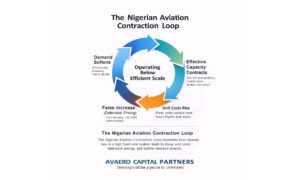
Central/Western Africa’s aviation sector is at a crossroads. Despite the global aviation industry’s rebound, the region struggles to take flight, posting a mere 3.7% year-over-year (YoY) passenger growth in 2024, according to IATA data. Domestic travel grew by just 1.0%, with international routes at 2.1%—a stark contrast to Northeast Asia’s 17.5% and Central Asia’s 16.7%. This lagging performance underscores deep structural and policy challenges that stifle growth and connectivity. For industry leaders and policymakers, understanding these barriers is the first step toward a transformative reset.
A Region Grounded by Structural Barriers
The reasons behind Central/Western Africa’s aviation stagnation are multifaceted, reflecting economic, operational, and regulatory headwinds.
The region’s economic fragility plays a central role. High poverty rates, currency volatility, and reliance on commodity exports like oil and minerals constrain disposable income, particularly for domestic travel. Inflation and unemployment further erode affordability, keeping air travel out of reach for most citizens.
Aviation infrastructure—or the lack thereof—compounds the issue. Outdated airports, limited runway capacity, and inefficient air traffic control systems struggle to support growth. Unreliable ground transportation to airports deters passengers, while airlines hesitate to expand routes in the face of such constraints.
Political instability and security concerns cast a long shadow. Ongoing conflicts in countries like Nigeria, Mali, and the Central African Republic, coupled with foreign travel advisories, deter tourists and business travelers alike. This uncertainty stifles both domestic and international demand, eroding the region’s appeal as a travel destination.
The High Cost of Low Competition
Market dynamics in Central/Western Africa reveal another layer of complexity. Competition, a natural driver of affordability, is scarce. The absence of low-cost carriers (LCCs) allows dominant players to maintain high fares, pricing out much of the population. Operational costs—elevated by expensive jet fuel, taxes, and regulatory fees—are passed directly to passengers, further suppressing demand.
Global economic pressures exacerbate these challenges. Inflation, rising fuel prices, and supply chain disruptions disproportionately burden less resilient markets like Central/Western Africa, constraining airline profitability and passenger affordability. While the region’s younger population, with a median age of 19.7 years, experienced a lighter health impact from the COVID-19 pandemic, the aviation sector still grapples with the fallout of global travel restrictions and reduced international demand.
Regulatory Roadblocks to Connectivity
Regulatory fragmentation is a critical barrier to growth. The Single African Air Transport Market (SAATM), intended to liberalize air travel, has seen sluggish adoption in Central/Western Africa, limiting the benefits of open skies policies. Intra-regional connectivity remains poor, with few direct flights between countries. Passengers often transit through external hubs like Europe or the Middle East, inflating travel time and costs.
Within the Economic Community of West African States (ECOWAS), visa-free travel policies exist in theory but falter in practice. Inconsistent application and bureaucratic hurdles discourage spontaneous travel, suppressing demand. A traveler moving between Accra and Lagos, for instance, might face unexpected delays or fees despite regional agreements, undermining the promise of seamless mobility.
The lack of 5th freedom rights further restricts connectivity. Without the ability to carry passengers between two foreign countries on a single route, airlines cannot operate efficient multi-stop flights within the region. This forces reliance on external hubs and limits the development of intra-African networks, keeping fares high and routes sparse.
Cultural and Market Misalignment
Cultural factors also play a role. Air travel is not a default mode of transportation for many in Central/Western Africa, where road and rail remain more affordable and ingrained. This caps domestic market potential. Meanwhile, the region’s failure to market its cultural and natural attractions—think the Congo Basin rainforests or Ghana’s historical sites—limits international appeal, unlike Southern Africa, which leverages destinations like South Africa to achieve 9.6% growth.
Charting a Path to Takeoff
Addressing Central/Western Africa’s aviation lag requires bold, coordinated action across multiple fronts.
Infrastructure investment is non-negotiable. Modernizing airports in hubs like Lagos and Accra, alongside improved air traffic management, can boost capacity and efficiency. Better ground transportation links will make airports more accessible, encouraging passenger uptake.
Political stability and security must be prioritized. Through regional collaboration via the African Union (AU) and ECOWAS, governments can resolve conflicts and enhance safety, rebuilding traveler confidence. Tackling corruption in aviation governance will ensure resources are deployed effectively.
Competition can transform affordability. Reducing taxes and fees to attract LCCs, coupled with full SAATM implementation, will drive down fares through market liberalization. Streamlining operational costs—particularly around fuel and regulatory burdens—will further ease pressure on ticket prices.
Regulatory harmonization is critical for connectivity. ECOWAS must enforce consistent visa-free travel policies, removing bureaucratic obstacles to seamless movement. Granting 5th freedom rights will enable airlines to operate multi-stop routes, reducing reliance on external hubs. More direct flights, such as between Abidjan and Kinshasa, and support for regional carriers like ASKY Airlines, can strengthen intra-African networks.
Economic diversification offers a long-term solution. Reducing reliance on volatile commodities through policies that foster job creation and education will grow the middle class, a key demographic for air travel. Meanwhile, targeted tourism campaigns and business hub development—think special economic zones or global conferences—can attract international passengers.
Technology and innovation provide a competitive edge. Digital tools like mobile ticketing apps can enhance passenger experience and cut costs, while data analytics can optimize flight schedules for higher load factors. Finally, robust safety protocols and international partnerships can counter negative travel perceptions, fostering a safer image for the region.
The Path Forward
Central/Western Africa’s aviation challenges reflect deeper structural and regulatory realities. Economic fragility, poor infrastructure, and policy inconsistencies—exacerbated by global economic pressures—have grounded the region’s potential. Yet, the opportunity for transformation is clear. By aligning infrastructure, policy, and market strategies, Central/Western Africa can close the gap with high-performing regions like Northeast Asia and Central Asia. For industry leaders, the call to action is urgent: a collaborative, comprehensive approach can lift the region’s skies, delivering economic growth and global connectivity. The time to act is now.
About the Author
Sindy Foster is Principal Managing Partner at Avaero Capital Partners, an aviation advisory firm focused on strategy, economics and operating performance across African and emerging aviation markets.
Her work centres on the structural drivers of airline performance — including capacity, pricing, operational resilience and system design. She advises airlines, investors and public-sector stakeholders on translating operating constraints into sustainable commercial outcomes.
Disclaimer: The insights in this article are for informational purposes only and do not constitute strategic advice. Aviation markets and circumstances vary, and decisions should be based on your organization’s specific context. For tailored consultancy, contact info@avaerocapital.com.